
Beyond the Warehouse Floor: Essential Equipment for Rough Terrain and Construction Sites

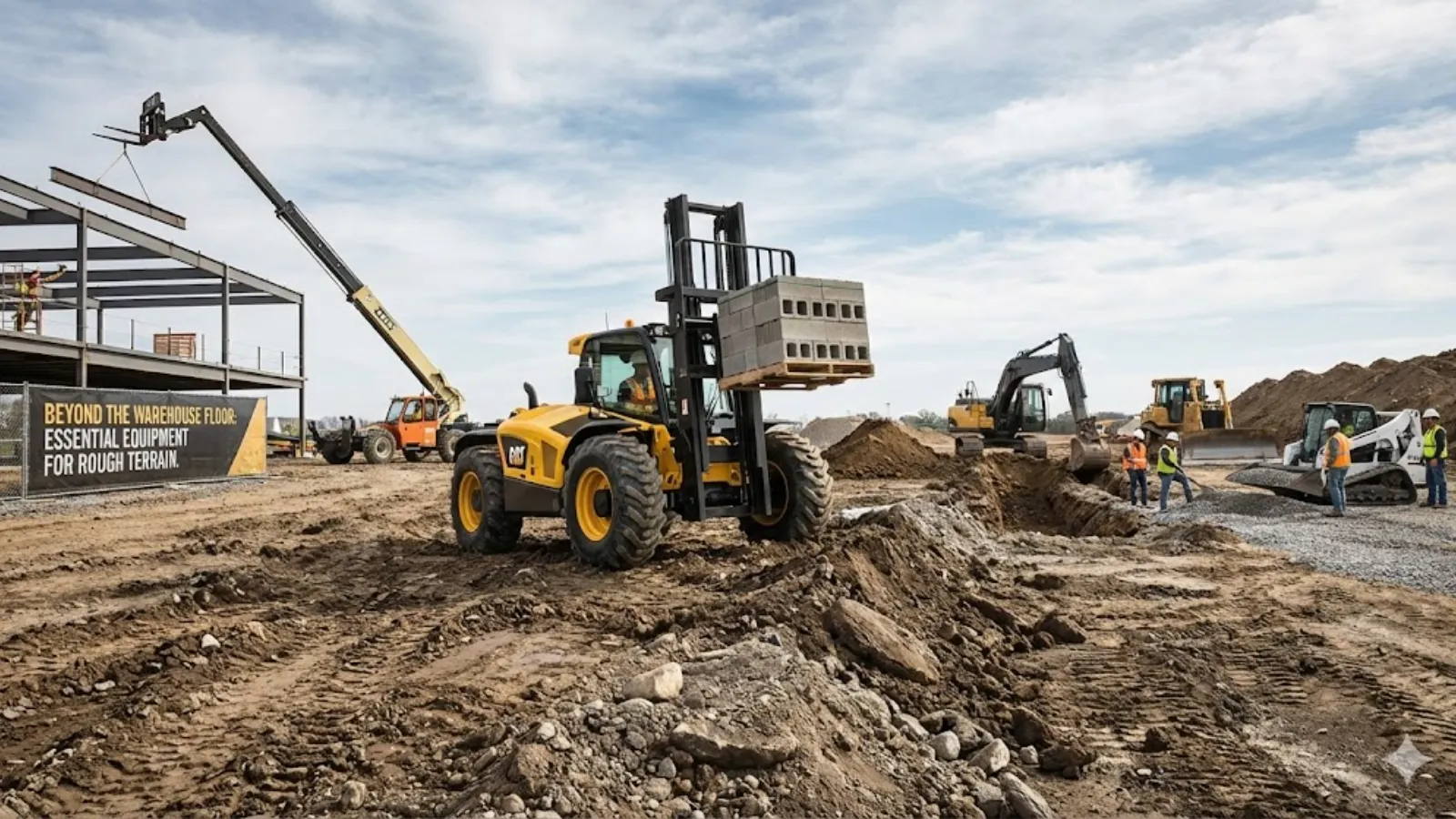
Material handling isn't always performed on smooth, polished concrete. Construction sites, lumber yards, agricultural centers, and aggregate facilities present a chaotic environment of gravel, mud, and uneven slopes. Standard warehouse equipment will fail instantly in these conditions. This article analyzes the specialized engineering behind Off-Road Forklifts, Off-road Pallet Stackers, and the heavy-duty Excavator.
The Engineering of "Off-Road"
What makes an Off-Road Forklift different? It comes down to three factors: clearance, tires, and traction.
Ground Clearance: Unlike a Three Point Forklift designed for low centers of gravity indoors, off-road variants sit high to clear rocks and debris.
Pneumatic Tires: They utilize large, deep-tread pneumatic tires rather than the solid cushion tires found on indoor lifts.
Drive Train: Many feature differential locks or 4WD capabilities to power through mud.
The same logic applies to the Off-road Pallet Truck and Off-road Pallet Stacker. These manual or semi-electric units feature oversized, wide-set wheels that straddle pallets, allowing workers to move heavy loads over gravel driveways or construction sites where a standard pallet jack would sink.
Excavators: The Backbone of Site Prep
Before any pallet can be moved, the ground must be prepared. The Excavator is listed in your classification for a reason—it is the primary tool for heavy earthmoving. Current market trends for excavators focus on hydraulic efficiency and compact designs (Mini-Excavators) that allow for work in tight urban construction zones. Whether digging trenches for utilities or grading land for a new storage yard, the excavator is the precursor to all logistics operations.
The Role of Tractors in Logistics
Included in your classification is the Tractor. In an industrial context, these are often Tow Tractors used to pull trains of carts across large manufacturing campuses or airports. However, in an off-road context, they serve as the prime mover for heavy implements.
Conclusion
Ignoring terrain is the number one cause of equipment damage in outdoor logistics. Using a warehouse forklift on gravel destroys the tires and transmission. Investing in specialized Off-Road Forklifts and Off-road Pallet Trucksensures that the supply chain doesn't break just because the pavement ends.